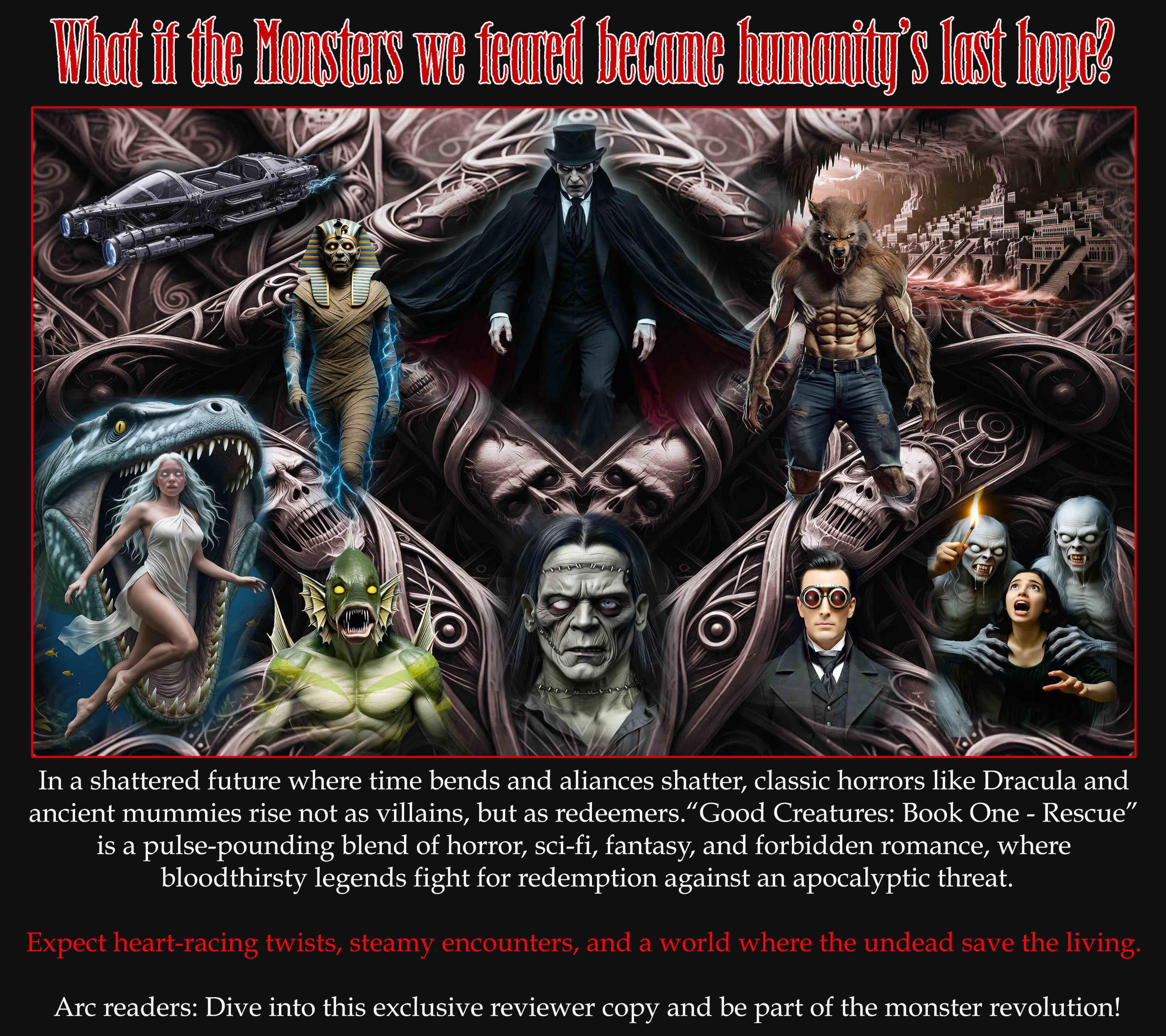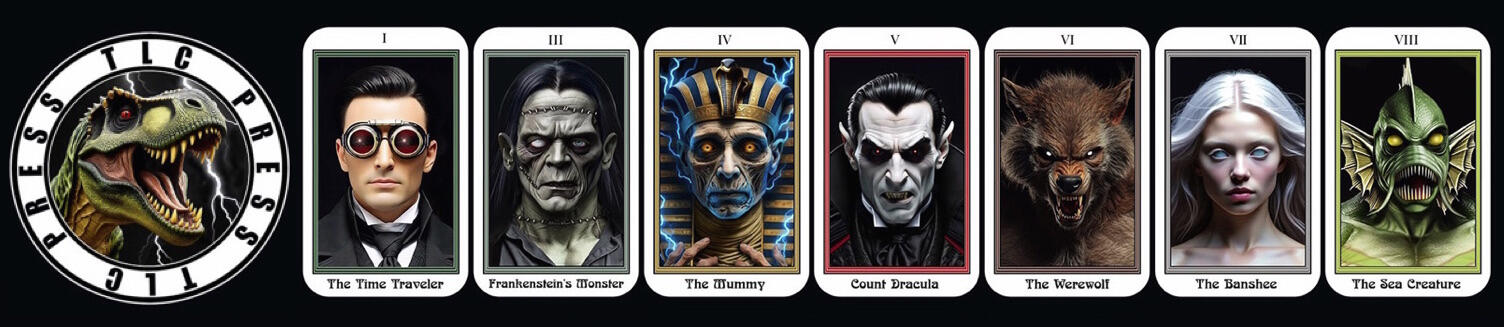
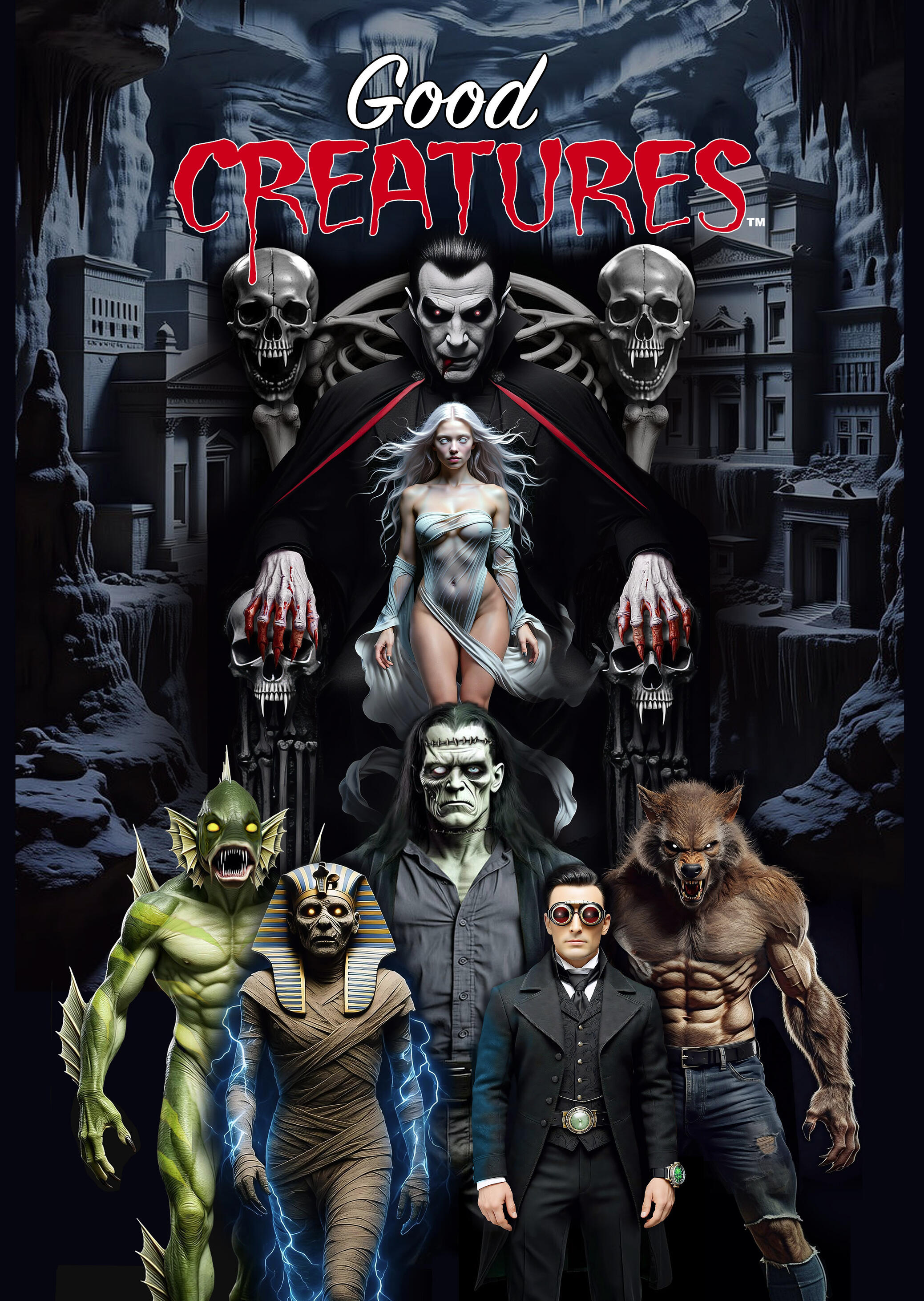
Good Creatures: Book One - Rescue, the debut Horror/Sci-Fi/Fantasy from TLC-Press.
The greatest monsters of the past are now humanity's last hope in the future.
All contents of this site are © John Warren - TLC Press.
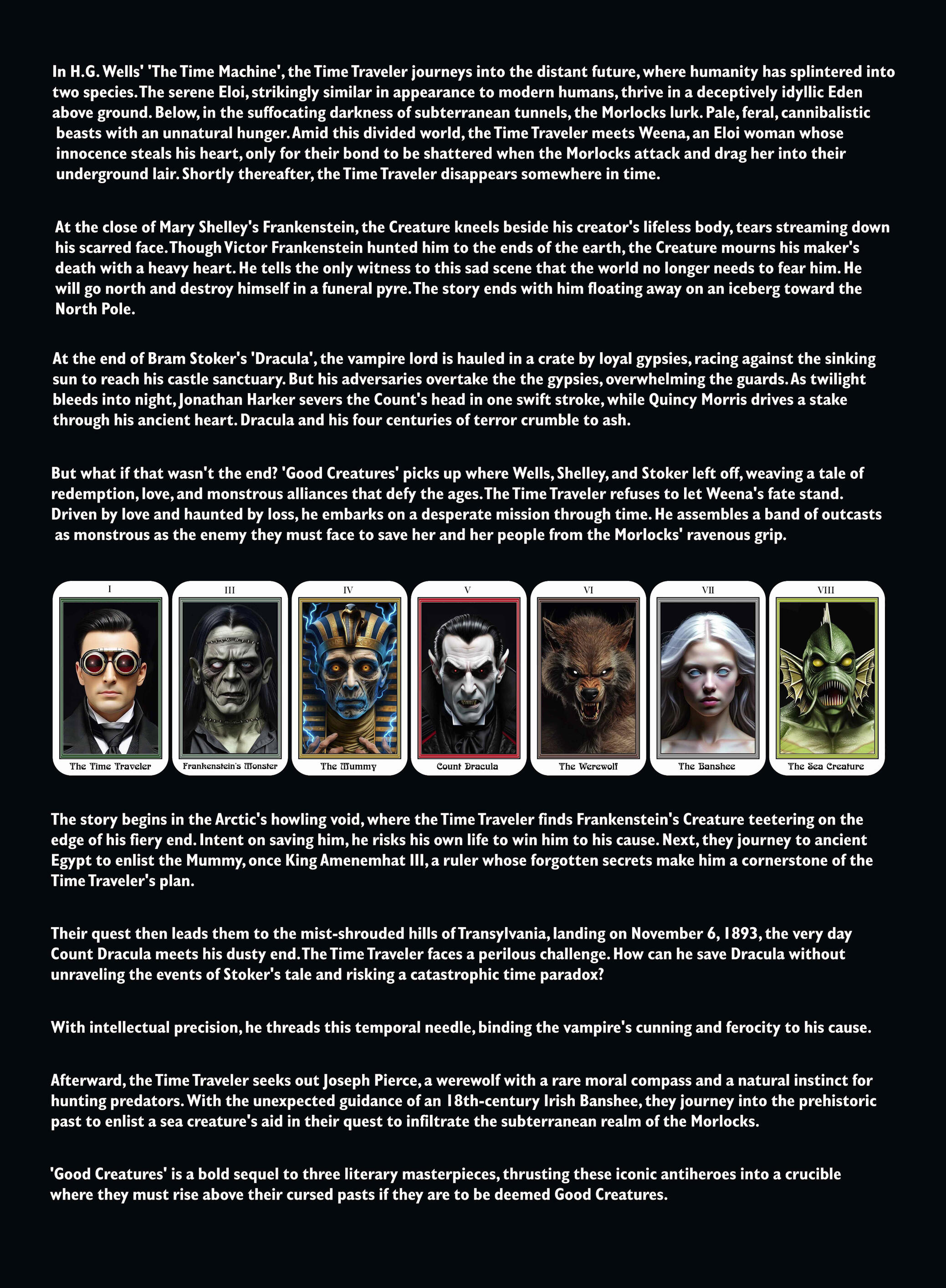
STAR
Prologue
August 24, 1893. London’s fog curled like a lover’s breath, thick and secretive, cloaking Hyde Park in a shroud of mystery. Aisha glided through it, her stolen sapphire gown hugged her curves, a whisper of rebellion against the weight of her life, pilfered from a Regent Street boutique.
Four years ago, she’d fled Istanbul’s clamor, its spice-laden air, its mosques echoing with calls to prayer, for England’s gray promise of a new start. But her father’s fists, which had bruised her mother’s spirit and her siblings’ hopes, were replaced by her husband Mehmet’s iron grip. At sixteen, she’d traded one cage for another through an arranged marriage, her dreams of freedom bartered for stability that felt like suffocation.
In London, she watched women in tailored dresses, their laughter free as birdsong, their arms linked with men who treated them as equals. The sight kindled a fire in her, a yearning for a life unbound by the burka’s shroud or Mehmet’s decrees. That afternoon, she’d slipped into the boutique, heart hammering like a trapped sparrow. Beneath her traditional garb, she hid the gown, delicate gloves, and a bonnet to veil her foreign features, her olive skin, her almond eyes, the high cheekbones that set her apart from London’s fair daughters. She’d never bared her face in public; in Istanbul, it was forbidden, and Mehmet enforced the same traditions. Unknowingly, she hid a rare exotic beauty that could inspire poets to weep or kings to forsake their thrones. Though, no one had ever called her pretty, her father’s cruelty and Mehmet’s indifference left her blind to her own radiance.
In a shadowed alcove of the park, she shed her burka, emerging as an English lady, stepping into the fantasy of a lady unbound. Her dark hair pinned beneath the bonnet, her eyes alight with joy and dread. Each step was a defiance, a prayer to a God she feared might forsake her.
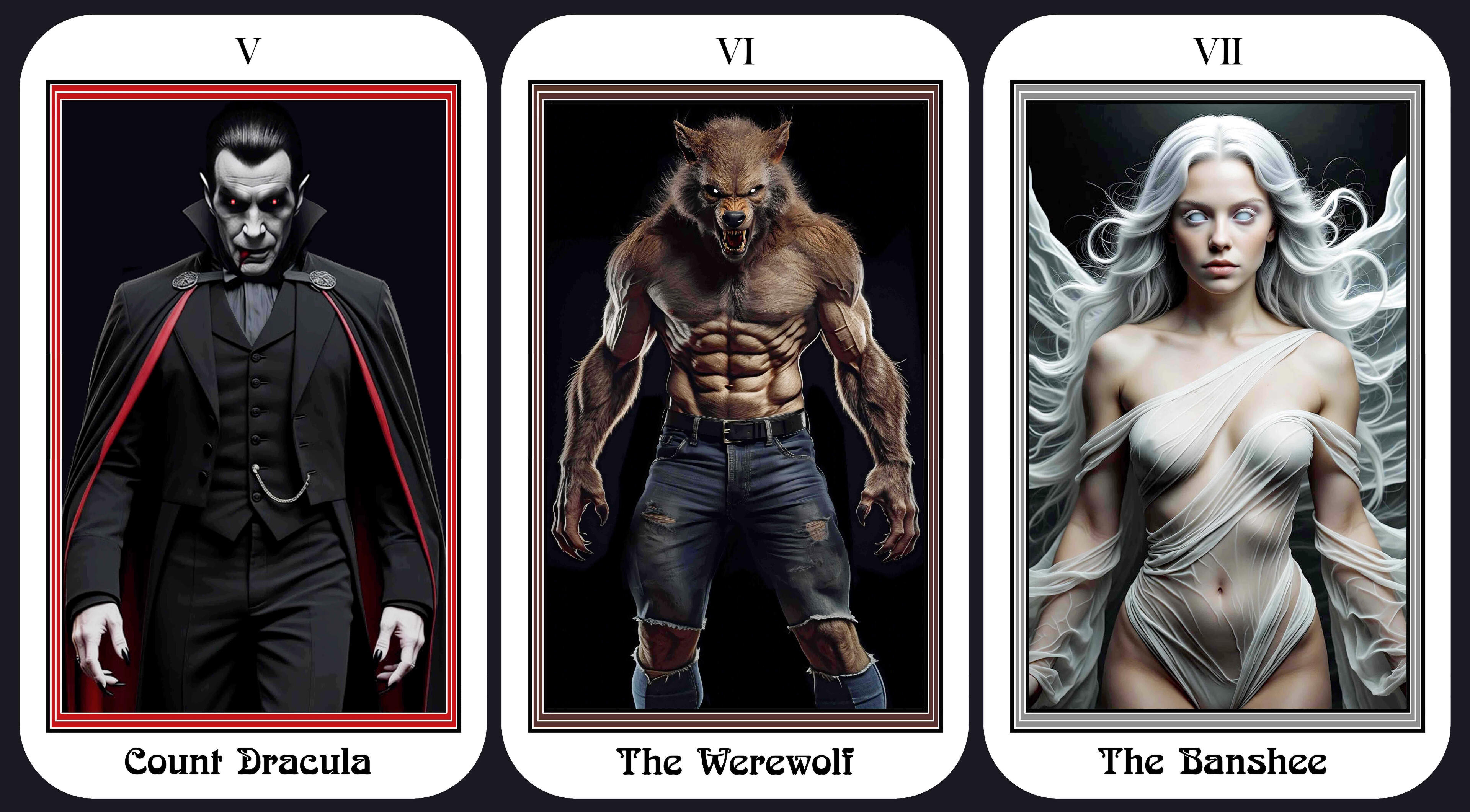
Unseen, beneath the gnarled oaks in the park, Count Dracula watched. His skin, kissed by moonlight’s pallor, glowed with stolen youth, Jonathan Harker’s vitality, and a slew of others now coursed through him. Dracula’s eyes, twin coals of ancient fire, tracked Aisha’s every move. He’d come to London not just for blood but for a heart to claim, a soul to share the eternal night. Aisha’s walk was a sonata of contrasts, joy in her swaying hips, unease in her darting glances, like a doe sensing the hunter’s gaze. She was a tapestry of strength and fragility, her veiled beauty a secret that stirred his ancient heart, but it was not beauty alone that drew the eye of Dracula. It was her lack of vanity, despite her beauty. He rose, his black cloak swirling like the night itself, and followed at a distance, his senses drinking in her scent: jasmine mingled with fear.
Aisha wandered into the city’s pulse, her gown a secret beneath her confident stride. She paused at shop windows, pretending to study lace and trinkets, her reflection a stranger’s face. In a crowded square, he approached, his presence parting the throng like a blade through silk. “Pardon my boldness, dear lady,” he said, his voice a velvet tide with a Transylvanian lilt, bowing with a grace that stilled the air. “Your radiance is a beacon in this fog-choked city. Might I inquire if you are lost? You seem... adrift in thought.”
Aisha froze, her pulse racing. No man had ever spoken to her so gently, so respectfully. Her husband’s words were commands, barked like orders to a servant, this stranger’s were a caress, stirring forbidden warmth. His eyes, deep as starless skies, held her captive, promising secrets she’d never dared dream. “I’m... merely walking, sir,” she said, her accented English soft but clear, honed by stolen books and secret lessons. Fear gripped her; if Mehmet discovered this, or worse, if someone from their community saw... But excitement fluttered in her chest, a forbidden thrill. He seemed like so much more than a man, radiating an aura that made her knees weak.
“I am Count Dracula, newly arrived from distant lands,” he said, his smile revealing a glint of fang catching the gaslight’s flicker. “And you, my star? What name graces such loveliness?”
“Aisha,” she whispered, blushing beneath her bonnet. They walked a few minutes along the business district speaking briefly of the city’s wonders, the chatter of markets, the gleam of the Thames under moonlight.
Motioning towards a sidewalk café on Oxford Street, he pulled a seat out for her, taking a seat across from her, and began regaling her with tales of distant castles, of nights unmarred by city’s glare, weaving a spell around her. “You walk as if seeking freedom,” he said knowingly, his voice low, intimate. “A heart such as yours deserves it.” His charm penetrated her. She had never felt so seen, so desired without demand.
Her fear dissolved under his gaze, replaced by a trembling ache. “I will find you again, Aisha,” he promised as he rose from his chair, tipping his top hat with a smile.
“How will I find you?” she asked, voice quivering with want. He winked, vanishing into the crowd.
Panic surged as his presence faded. She hurried to the boutique, discarding the gown in a frantic pile, shrouding herself in her burka. At the market, she grabbed onions, cumin, flatbread, a flimsy alibi. Home, Mehmet’s rage awaited, his eyes narrow with suspicion. “Where have you been, woman? The sun sets, and dinner waits!”
His fists found her ribs, her shoulders, each blow a reminder of her chains. She shielded her face, guarding it in hopes of future escapes, and bore the pain with secret joy. The memory of Dracula’s smile was a talisman, worth every bruise.
Two days later, Mehmet’s work summoned him away, a rare reprieve. Aisha seized it, bolder now. At the boutique, she slipped into a crimson dress, its hue a defiant flame. She hid her traditional clothes in a quiet aisle, her heart a drum of hope and fear. The bonnet crowned her again, veiling the exotic beauty she didn’t know she possessed. Retracing her steps through the park, she prayed for a glimpse of him. At the sidewalk café on Oxford Street, she found him, Dracula, seated at a wrought-iron table, a steaming teacup before an empty chair, as if he’d known she’d come.
He rose, pulling out her seat with gentlemanly poise. “My star returns,” he murmured, his voice a low tide pulling her under. “I felt your heart calling.”
She sat, her heart soaring. “Would you care for tea as well?” she offered shyly, her fingers trembling on the table’s edge.
He shook his head, waving it away, his eyes twinkling like forbidden stars. “My thirst is sated, but your presence is sweeter than any brew.” He leaned closer, his breath cool against her cheek. “Tell me, Aisha, what dreams hide
in those eyes?”
They spoke, words weaving a bridge across their worlds. She told him of Istanbul’s labyrinthine bazaars, the scent of saffron and sea, her father’s cruelty that drove her to England. “Mehmet’s demands of obedience,” she confessed, voice barely above a whisper. “I see women here, free to laugh, to choose. I want... that.”
Dracula’s fingers brushed hers, a spark igniting. “Freedom is a flame, Aisha. It consumes chains but demands courage. In my world, I’ve shattered every bond. With you beside me, you could too.” His tales painted a life unbound, nights under endless skies, power to defy fate. “You could walk as my equal, not a shadow,” he said, his voice dark honey, stirring her soul. “Imagine wandering the world, no chains of man or faith to hold you. Power to shape your fate.”
She hung on his words, a bond forming like threads of silk. “You speak as if you’ve lived centuries,” she said, half-joking.
His smile deepened. “Perhaps? All that I have could be yours as well, should you choose to partake of it.”
Their meetings became a ritual, stolen hours when Mehmet was absent. Dracula found her effortlessly, his arm offered in the English way, her hand resting lightly on his sleeve. They strolled through Hyde Park’s mist, along the Thames’ gleaming banks, his whispers a siren’s call. “Imagine a world where no man commands you,” he’d say, his lips close to her ear. “Power to claim your desires, to stand unbowed.” Her laughter grew bold, her touches daring, a linger on his arm, a gaze that held too long. Her heart, once caged, began to sing for him, and in a quiet moment by the river, she dared to name him. “You are my moon,” she murmured, her voice a soft vow, his presence her guiding light in the dark.
He smiled, eyes softening. “And you, my star,” he replied.
Each word wove a tapestry of a future where she was free, powerful, his. Aisha fell, seduced by his vision, his touch, his promise. He was her rebellion made flesh, her heart’s secret song. She’d forsake all, husband, faith, soul, to be his. But her daring grew reckless. One evening, she lingered too long in his presence, neglecting alibis. Mehmet’s fury was a storm, his fists left a bruise blooming on her cheek, a violet stain of his control. As he slept, she fled, changing in a moonless alley, a crimson dress her armor against the night.
A drunk stumbled upon her, reeking of gin, eyes glassy with lust. “Oi,
fancy a tumble?” he slurred, grabbing her wrist, mistaking her for a woman of the night.
“Get away!” she snapped, wrenching free.
As his fist rose, shadows coalesced around him. Dracula materialized behind him, a specter of wrath. With inhuman speed, he seized the man, fangs sinking into his throat. A guttural rip echoed; blood sprayed in a hot arc, a warm drop kissing Aisha’s cheek. The drunk collapsed, his throat torn apart, eyes frozen in terror.
Dracula turned, handkerchief in hand, gently dabbing her skin. “Fear not, no harm will touch you, my love,” his voice a vow of forever, his eyes burning with fierce devotion.
Her smile was fearless, radiant. His violence didn’t horrify; it thrilled, a testament to his protection. She was his, body and soul, damn the consequences.
In a whirl of supernatural grace, he swept her through the night, the world blurring past. They arrived at a hidden manor in the countryside, bought with ancient gold, a secret kept from Harker and his prying firm. Candlelit rooms glowed with opulence, silk drapes the color of midnight, velvet cushions soft as whispers. That night, he claimed her, his kisses a dance of fire and frost, awakening desires she’d never known. His touch was a symphony, each caress a note of freedom, her body arching in ecstasy as she surrendered to passion’s tide.
At dawn, he offered eternity. “Join me, Aisha,” he whispered, his lips brushing her throat as she beckoned him to take her. “Our love, sealed in blood, will burn through the ages.” His fangs pierced her, her blood a sweet offering; as he supped from her and she from him, the dark elixir remaking her. Power flooded her veins, senses sharp as shattered glass, strength like forged iron. She was reborn, a terror in crimson silk, her heart beating with his.
A week of rapture followed, their bodies and souls entwined in endless night. Each touch was a vow, each whisper a promise of forever. They danced in the manor’s shadowed halls, her laughter echoing like a bell, his kisses branding her as his own. “My moon,” she’d sigh, her fingers tracing his jaw. “My star,” he’d reply, his eyes drinking in her unveiled grace.
“Tomorrow,” he said one evening, his voice grave with purpose, “we visit Mehmet. Your first kill, to seal your power as nosferatu.”
He left to settle “business,” promising to return. But night fell, and he was gone. Aisha paced the manor, agony clawing her newborn heart. The hunger for him was a wound, deeper than Mehmet’s blows, sharper than her father’s cruelty. She stood at the window, staring into the fog, her enhanced senses catching every rustle of leaves, every distant cry, but not him. Her soul ached, torn at the edges, a fledgling vampire lost in love’s torment.
Unseen, Dracula led his hunters, Van Helsing and his righteous band, back to Transylvania’s mists, a desperate gambit to shield his greatest secret: Aisha, his star, the love he’d die to protect. The manor stood silent, her heart a beacon he’d sworn to find again, if eternity allowed.
Supplemental Chapter - The origin of Joey Pierce
by David Mark McElligott
Joey checked his watch again. The new guy was late, and this was not a good night for that kind of crap. Being a roadie was a dream job if you could just lift a few pounds and be on time! Joey had met Lonnie at a diner in town. The guy had a rough, hungry look about him, with an underlying sense of almost desperation. He was huddled around a cup of black coffee at the counter, and Joey could see him stealing glimpses of the lemon meringue pie rotating in its plastic case near the cash register. Joey toyed with the idea of offering the guy some money, but some folks were proud and reacted poorly to offers of a handout.
After giving it some thought, he finally approached the man, unable to watch him lust after the pie any longer. “Hey, brother, any chance you’re looking for a job? Because you look like the kind of guy we could use,” Joey said. The guy studied Joey for a second before responding, “And what kind of guy is that?” “Young, big. I assume strong. I’m a roadie for the band Three Dog Night, and we are running a little low on manpower at the moment. I’m not the guy who does the hiring, but I sure can hook you up with him. There’s a lot of travel, plenty of pharmaceutical entertainment, if you get my drift, and chicks. There’s always chicks,” Joey told him. “Travel. How often do you move from place to place? How far do you travel?” the man asked. “Oh, dude, we’re all over the country right now. Probably be going overseas at some point, the way things are going. They really dig us in Japan! But hey, if you want to stay closer to home, you can still make a buck or two in the local venues.”
“Hey, I’m getting a piece of that pie. Want one? On me,” Joey said. “Yeah, sure, um...” “Oh, Joey Pierce,” Joey said, holding out his hand. “Pleasetameetcha!” “Um, call me Lonnie Tal, um, Talbert,” he said, shaking
Joey’s hand. That was three cities ago, and until tonight, Lonnie was a great worker.
Joey gave up waiting out back, flicked his cigarette away, pulled his collar up around his neck, and headed into the loading dock of the Anaheim Convention Center, where the trucks were parked. It was December 13th, and tonight was going to be a great one. Black Pearl was warming up, opening the show. Three Dog Night was next, and Steppenwolf was wrapping up the evening. Backstage was a mass of equipment, cords, and roadies. Everyone was scrambling about, trying to keep the equipment and instruments gathered and separated by band. Pearl’s stuff was being brought on stage and set up for sound check, and Joey’s crew was setting their stuff up behind Black Pearl’s. Three Dog Night had a larger setup and needed to be ready to push forward in short order when Black Pearl wrapped for the night.
Later, while Three Dog Night was playing their set, Steppenwolf’s gear would be placed on stage behind a curtain, tuned, and sound-checked. It was a smooth operation that they had performed over and over, city after city. Everyone knew their role, and Joey found himself doing double duty to cover Lonnie’s absence. The crowd had not been let into the convention center yet and was lined up out front, though, like always, there were a few wiseasses who thought they could buy their way in the back with a little weed or a couple of slutty girls who figured short skirts and low-cut tops would get them backstage. Sometimes it did, but most of the time, the crew had to police the loading dock and keep out undesirables. That was all Joey needed: to have some psychotic fan slip through and hurt one of the guys in the band.
After setup and sound check were completed, Joey had a bit of free time. The crowd had been let in and was already packed along the stage, and the smell of marijuana filled the Anaheim Convention Center. Joey stood at the dock in back, looking out over the city. The moon was full, and its bluish light reached everywhere the electric lights of the city didn’t. The muted sounds of live music reached him back here, tamed by the walls and hallways of the venue. He lit a Winston and blew a smoke ring into the night. It was still, almost windless. If you gotta do winter, he thought, it’s best to do it in Southern California.
The girls came around the corner, giggling at some witticism one of them had just said. Blonde and leggy, and somewhat inebriated, they walked stiltedly in their high heels, hanging onto each other. Joey was about to head them off at the back entrance and turn them around when something moved in the bushes along the back lot near the garbage dumpsters. There was a low, threatening growl, and everything seemed to stop. The sound of music faded away, and the giggling of the girls ceased. Each of them stood still and held their breath. The bushes exploded with furious movement, and an unspeakable beast charged at the girls like a runaway car. Joey was transfixed as the beast crossed the back lot in only a couple of strides. The girls seemed paralyzed as it approached them, until one of them found the breath to scream.
The scream broke the spell, and Joey flicked his cigarette away and reached into the darkness alongside the dock door, where spare and unused equipment was stashed. There was a heavy-duty cymbal stand leaning against the wall, and Joey grabbed it and leapt from the dock into the loading bay, headed for the girls. In the split second it had taken Joey to arm himself and join the fray, one of the girls was already lying in a spreading pool of blood in the lot. The other was screaming breathlessly in a way that made her voice come out like a whistle that could barely be heard, like a scream in a nightmare. Joey swung the cymbal stand in a looping arc and caught the monster across the back of its neck. The stand was heavy and solid and would have put any six-plus-foot man in the hospital with the force Joey had put behind it. But the creature only flinched and turned its attention toward him. Looking into its blazing eyes was the moment the reality of the situation hit Joey. This was not a man, and it was not an animal. This was an honest-to-God monster, and Joey had just gotten its full and undivided attention.
Joey’s vision darkened as his adrenaline peaked, and his focus was entirely
on the beast. It towered over him, maybe six feet five inches, shaped roughly like a man but covered in coarse gray-brown hair. Claws covered with gore and teeth that glinted in the moonlight augmented the beast’s deep growl as it turned on Joey. Joey could only hope the girl was using this time to run to safety. What happened next was dreamlike and reflexive. The beast snapped its head forward to bite just as Joey thrust his arm forward to spear it with the cymbal stand, and the beast buried its teeth partly on Joey’s forearm and partly on the metal stand. The point of the stand jammed into the back of the creature’s throat, and for some reason Joey didn’t understand, his silver ring got very hot and began to sizzle on his finger and in the beast’s mouth. The monster reared back and gave out a bubbling roar, almost like it was gargling, as Joey fell back onto the tarmac. It reached out, grabbed the girl who had not moved an inch, scooped her up in its arm, and loped off into the brush where it came from. Joey lay there briefly and lost consciousness.
He woke to roadies and crew gathered around him, sirens in the distance, coming closer. His arm hurt, but his finger burned like it was on fire. He reached down and yanked his ring off; it was hot to the touch, like it had been sitting on a stove. He tossed it across the lot as he lay there and noticed a group of people also surrounding the body of the first blonde. She was obviously dead and bled out. “Dude, what’s the status of the chick?” one roadie asked. “Landfill, bro,” the other responded. Joey faded back out as the red and blue lights of the police arrived and danced across the loading dock.
Joey came to in a hospital room. His arm was bandaged, and he had an IV inserted, delivering some sort of liquid into his system, maybe antibiotics or pain meds. Wires and tubes connected him to a monitor that read out his vitals as he lay there. He looked around the room slowly, his head aching and unsteady. The room tilted and spun sickeningly. He must have gotten a concussion when he hit the pavement last night. Sitting in a chair next to his bed was Lonnie.
“Hey, bro,” he said. His voice was hoarse and raw. “I’m sorry about last night, the way things played out.” “I seriously doubt you could have done much to help, man. If you’d have been there, you’d have ended up in a hospital bed too. Maybe worse,” Joey responded. “You don’t understand. I was there,” Lonnie said, looking around. “I’m the thing that attacked you,” he added in a lower tone. “What? You been tripping? What attacked me wasn’t human. Not even a little bit,” Joey said. “I know that. I ate a girl last night. I know about not being human. I know what it’s like to have a cymbal stand jammed into the back of my throat. You haven’t told anyone about that, have you?” Lonnie said in a low growl.
“I haven’t talked to anyone about anything yet. What, were you nearby watching the whole thing?” “Ugh, this is always the hardest part. They never believe,” Lonnie said, almost to himself. “I notice you aren’t wearing your ring. It got hot, didn’t it? It certainly was hot when it burned my mouth last night.” “Wait, how could you know? What’s going on, Lonnie?” Joey asked. “I’m a friggin’ werewolf, man. This is why I liked the idea of this job: traveling. Never in the same place from one full moon to the next. You did notice how bright it was last night, right? Full moon.” “So you’re telling me I’m a werewolf now? Dude, I’ve taken a boatload of drugs in my day, but I’m not stupid. Werewolves don’t exist.”
“You looked into my eyes last night. What do you think you dealt with? Was that a dog? Was it a guy? Did it kill two girls and disable you in under a minute? Look into my eyes now and tell me I’m lying.” After a time, just staring at each other, Joey began to believe. “So what happens now?” “Well, first we need to get out of here and go to ground before the cops start asking hard questions. Werewolf isn’t an acceptable answer to most of the questions they have.” “We can head south into San Diego,” Joey suggested, sitting up higher in bed and starting another nauseous wave of head spins.
“No. San Diego is currently Oliver’s territory. We’re not free to just encroach,” Lonnie said. “Oliver? Are you saying there are others?” Joey asked. “Absolutely. Wolves are pack animals, and there are many of us. Our Alpha, Henry, has instructed that we spread out over the continent so as not to draw attention to our existence. At this point, there are fifteen of us: David, Bela, Jack, Benny and his dad, Tony, Michael, Oliver, Henry, Kevin, Luc, Dee, John, Don, me, and now you,” Lonnie said. “That’s crazy! How do fifteen werewolves exist and nobody knows about it? You all hunt during the full moon, but it never comes to the attention of the authorities?” Joey boggled. “We’re spread out over the continent. Do you have any idea how many people go missing every month? Yeah, it goes unnoticed, mostly because we don’t allow witnesses to live,” Lonnie said. “See, that’s going to be a problem for me,” Joey replied. “I don’t kill. I certainly would never kill anyone just
because they saw me!”
“You’ll kill, bro. You don’t have a choice about that. You may try to keep it
to animals like deer. I hear David did okay with that for a while, but your need to feed will overwhelm you. You may have some control over who or what, but not a lot. I’m truly sorry, man. I didn’t want this to happen. I had no idea you’d be out on the dock, and I really had no idea you’d have the balls to attack me!” Lonnie said. “Grab me my clothes. I need to get out of here and get my head together,” Joey said, moving slowly but moving. He got dressed and headed out into the world with Lonnie guiding him. Things had changed forever for Joey Pierce.
All contents of this site are © John Warren - TLC Press.
In the tapestry of creation, every story owes its genesis to a confluence of inspirations: those key people who light a fire within us, turning obstacles into opportunities and ideas into reality. This novel, born from reimagining classic monsters in a fresh, time-bending adventure, is dedicated to the mentors and friends who helped me discover my love for words and creation. It’s a reminder that true education comes not from rigid routines, but from connecting with what truly excites us. Through their influence, I went from struggling with the basics to crafting tales of redemption, horror, and unexpected alliances. What follows is more than an introduction; it’s the story behind the story, linking the threads of encouragement, wisdom, and collaboration that brought this book to life.
My journey started back in third grade, amid the upheaval of moving from Newton, Iowa, to the small town of Mingo. At my old school, I’d been in a reading group that was two levels below the lowest reading group in my new school, so they advanced me just to fit me into the bottom tier. That relegated me to the role of the class’s weakest reader, and it made me dread books altogether. I was paired with a special education teacher to help me catch up to the rest of my class. Beyond targeting my weak spots, she sparked my interest in reading by introducing me to material that I actually found interesting, a straightforward idea, yet she was the only teacher who’d thought to try it. Her tools were illustrated editions of classics like Dracula and Frankenstein, styled like comic books in black and white, complete with cassette tapes for reading along. The cassettes helped build my vocabulary and improve my pronunciation. Paired with the stories themselves, they turned learning into something fun. Once my schoolwork was on track, she’d let me pick stories to dive into during our sessions. She was such an exceptional teacher and
wonderful person in general that I asked to stay under her tutelage even after I no longer needed her assistance to keep up with my classmates. I stayed with her for an extra year, and we kept in touch via letters for years after she left the school.
Because of her influence and help, by the time I was in ninth grade, I was the only one in my class to get an A on a Macbeth test. I helped two friends snag Bs, there were two students that got Ds, and everyone else failed. In just six years, I’d transformed from the worst reader in the class to one of its best, all thanks to Jan Joiner’s method of inspiring learning through personalized discovery. She had elevated my comprehension and ignited a lifelong love affair with reading. Hands down, she was the best teacher I ever had.
Her legacy subtly echoes in this very work. It was only midway through crafting the graphic novel that preceded this book, Good Creatures, that the irony struck: I was reimagining the very characters she had first introduced me to, the monsters that had ignited my literary passion.
Building upon this foundation, the second catalyst emerged from an encounter at a comic convention in Buffalo, New York, 2017. There, I met Jim Shooter, the former editor-in-chief of Marvel Comics. Under his leadership, Marvel was propelled to unprecedented profitability and acclaim. It was during his tenure that I discovered comics and developed a love for the medium. Most of the stories I enjoyed were crafted with him at the helm.
Many things have been said about Jim Shooter over the years, but I can only tell you of my own experience with him, which was refreshingly positive. He was approachable and generous with his time. Amidst the buzz of the event, his table stood as an oasis of accessibility; no throngs encircled him, allowing for intimate exchanges as he regaled passersby with tales from his storied career. Intrigued by his insights, I sought his counsel on navigating the comic industry. Shooter, ever candid, explained the evolving landscape: publishers had ceased accepting unsolicited submissions, wary of litigation over conceptual similarities, yet they were hungry for proven, original ideas. His sage advice? Create something uniquely yours, grow an online audience, and wait for them to come knocking. It was practical wisdom that shifted my approach from seeking approval to building from the ground up.
Inspired by Jim’s guidance, I reached out to my longtime friend and collaborator, Mark McElligott, whose enthusiasm became the third pillar of this book’s inspiration. Pitching concepts to build an online audience, I proposed two different ideas:
The first involved creating a story centered around an alternate timeline of the X-Men. We couldn’t publish the story, as the rights are owned by Marvel Comics, but we could create a story and share the pages online to try and build an audience interested in reading our version of the characters, and possibly coax Marvel into hiring us in the future.
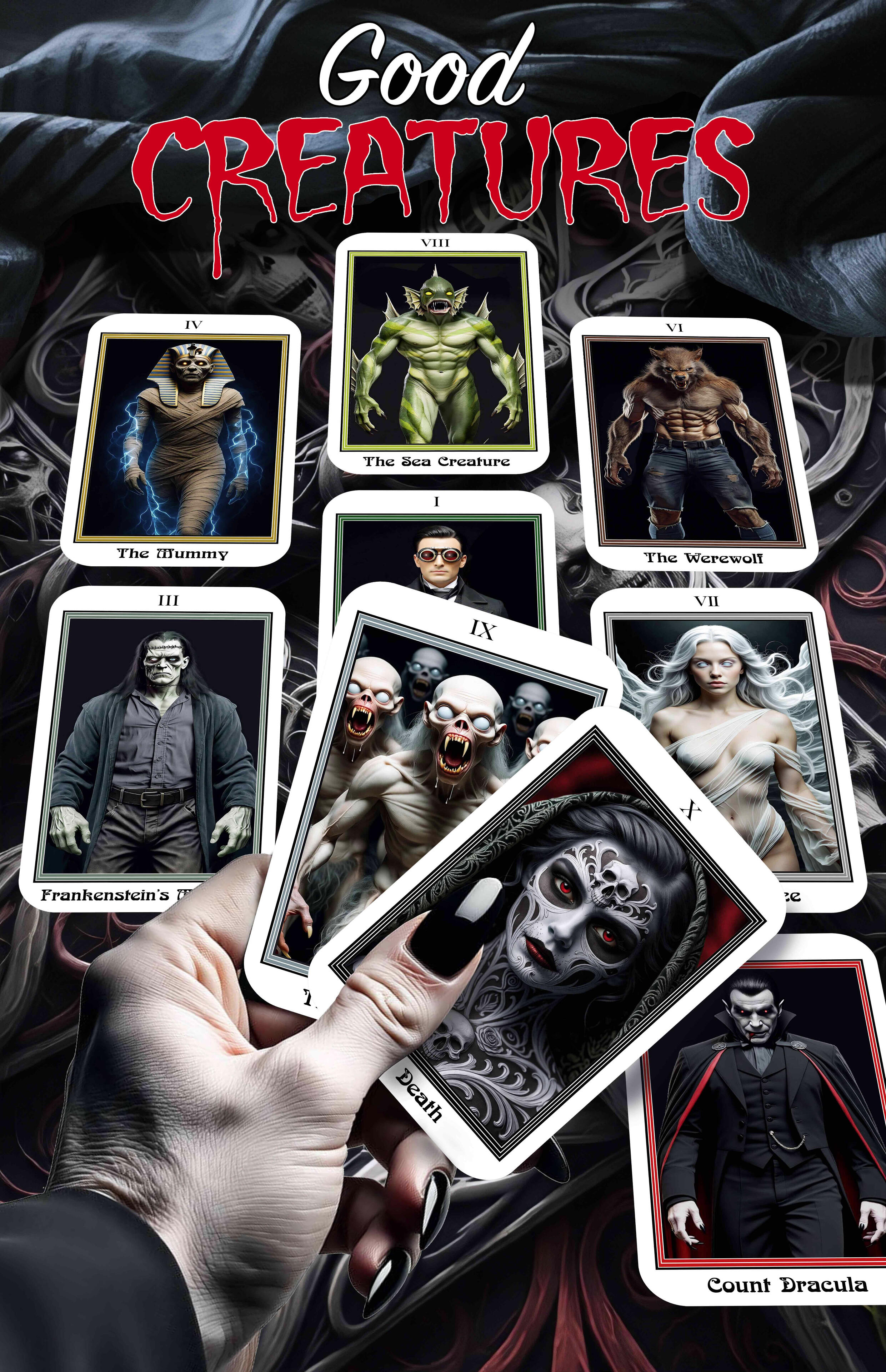
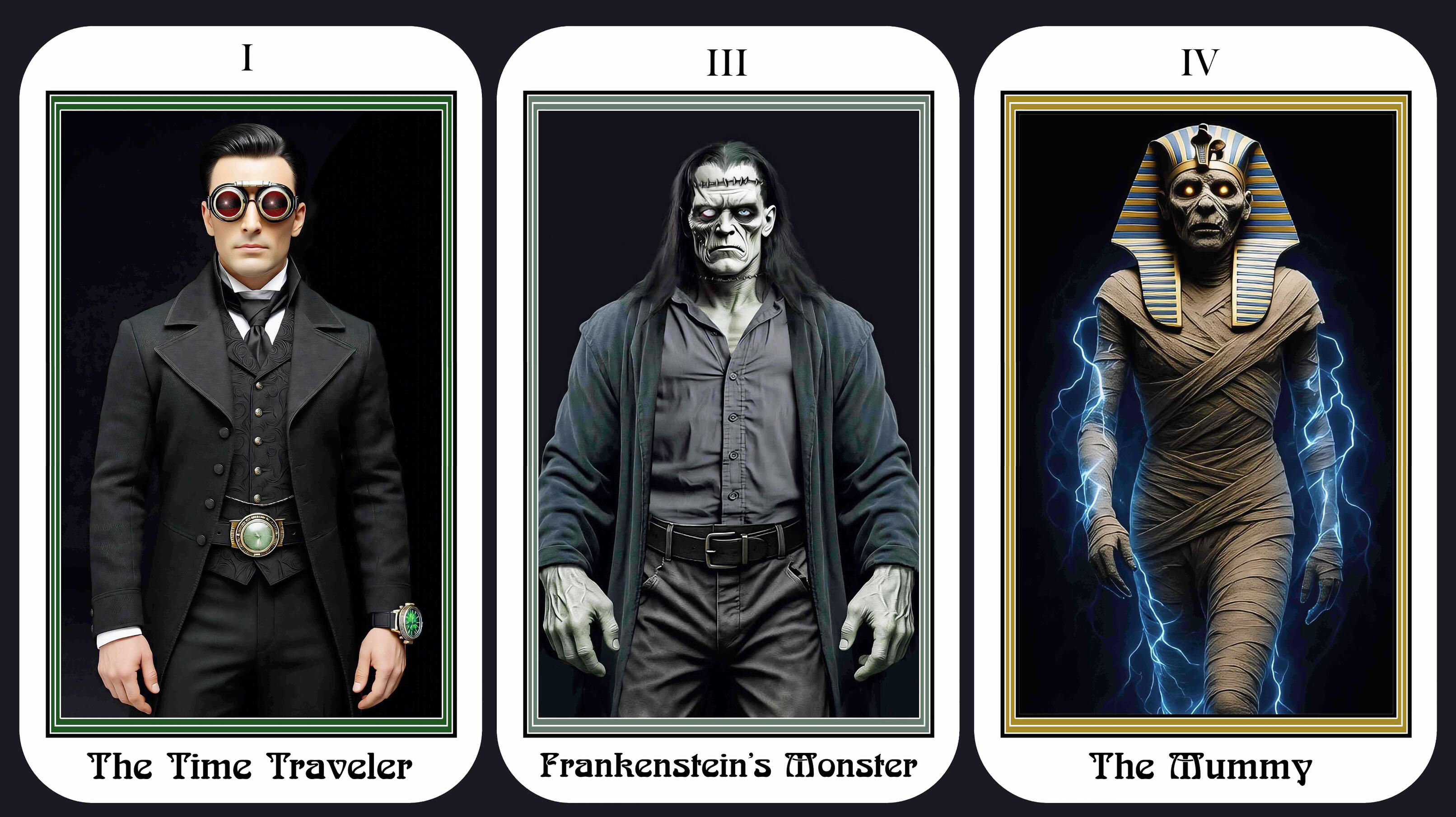
The second idea I pitched him was a bold sequel to the public domain classics: Dracula, Frankenstein, and The Time Machine. The latter resonated deeply with Mark’s affinity for the Universal Monsters, offering a canvas unbound by corporate ownership. Chronologically, though, these stories span centuries. Shelley’s Frankenstein from over 200 years ago, Stoker’s Dracula about a century later, so uniting them faithfully, without the loose adaptations seen in films, required creativity. Time travel provided the perfect bridge, allowing for a coherent mix of werewolves, mummies, sea creatures, and more: monsters clashing with monsters, themes of redemption, a touch of romance, all blended with action, sci-fi, and horror. It was this idea that stuck.
I’d planned to outline the plot for Mark to write, given his talent as both an artist and wordsmith, while I handled research and development of the characters, drawing from my deep dives into the original novels to stay true to the authors’ visions while crafting something new. But as I plotted, the story took on a life of its own; scenes poured out, characters seemed to guide my pen. I’d been writing short stories and YouTube scripts for years, but never a graphic novel. Mark, upon reviewing the drafts, urged me to keep going, contributing refinements to establish a harmonious rhythm before stepping back to illustrate. Over three and a half years, his visual interpretations infused the story with depth, incorporating his ideas and elevating the narrative beyond my initial script. The result was a polished graphic novel, a true collaboration forged from decades of friendship and shared creative synergy.
Yet the transition from graphic novel demanded one final evolution, transforming a visual epic into the literary form you now hold. From its very inception, I’d always approached the story as if I were writing a novel, rather than a horror comic or graphic novel. So somewhere in the back of my mind, I always thought I’d eventually convert it. Mark’s writing prowess seemed ideal for this refinement. It would just be a matter of intermingling the dialogue, narration, and the scene descriptions I’d provided for him when he rendered the story, into a cohesive narrative.
That last piece of the puzzle came from an unlikely source, when I was writing a short story about some paranormal experiences I had as a young child that I intended to illustrate. I started thinking about whether it might work better as a novel, so to indulge my curiosity, I decided to feed the story into Grok, which is one of the better AI creative platforms available. I gave it a simple prompt to treat the short story like a chapter in a novel and adapt its format accordingly. What it fed me back was surprisingly good. It was still my story, with none of the details altered or changed, but it seamlessly converted the style.
I showed the short story to Mark and he immediately saw the potential. He suggested using Grok to convert Good Creatures, noting it mirrored his intended approach: a straightforward format shift without altering the narrative or the story.
Grok proved handy for efficiencies, like converting “Jonathan:” to “Jonathan said, with a wry smile,” by incorporating my artist notes. Still, it does require quite a bit of oversight. In one instance it changed a phrase I wrote for the time traveler in a conversation with Dracula: “When was the last time someone reached their hand out to you in friendship, that knew what you truly are?” with Dracula responding dryly: “I might have bitten it off.” Grok changed the first line to “when was the last time someone reached out to you in friendship.” It’s a subtle difference, but if it’s not your hand
you’re reaching out with, then what did Dracula bite off?
Where it shines, though, is when you ask it to write chapters in various
styles, which can help you improve the narrative flow of your story by blending different approaches. So, again, it’s a useful tool, so long as you don’t allow it to be a crutch. Without direction and a solid script to work with, though, it would produce a nonsensical mess.
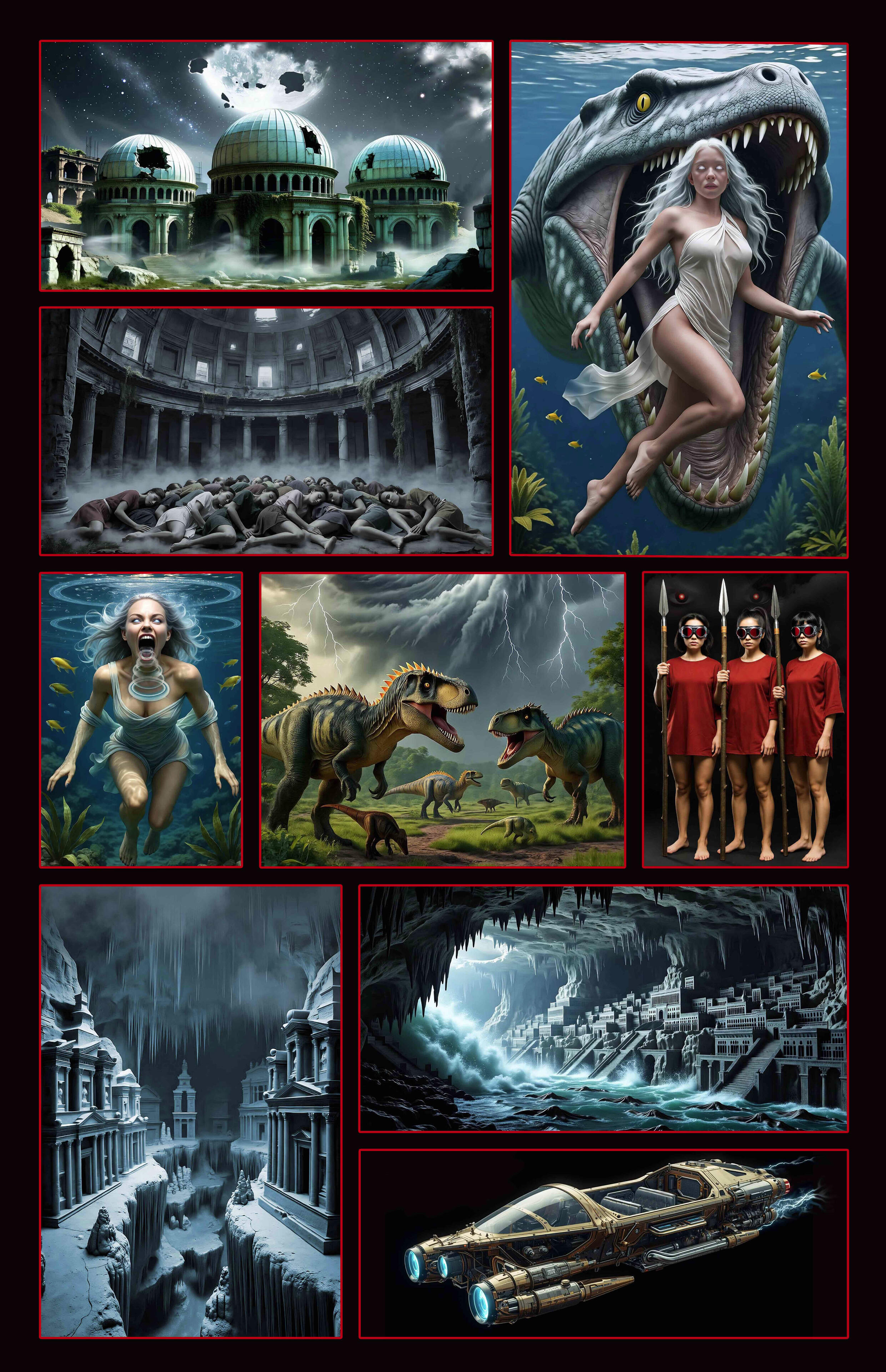
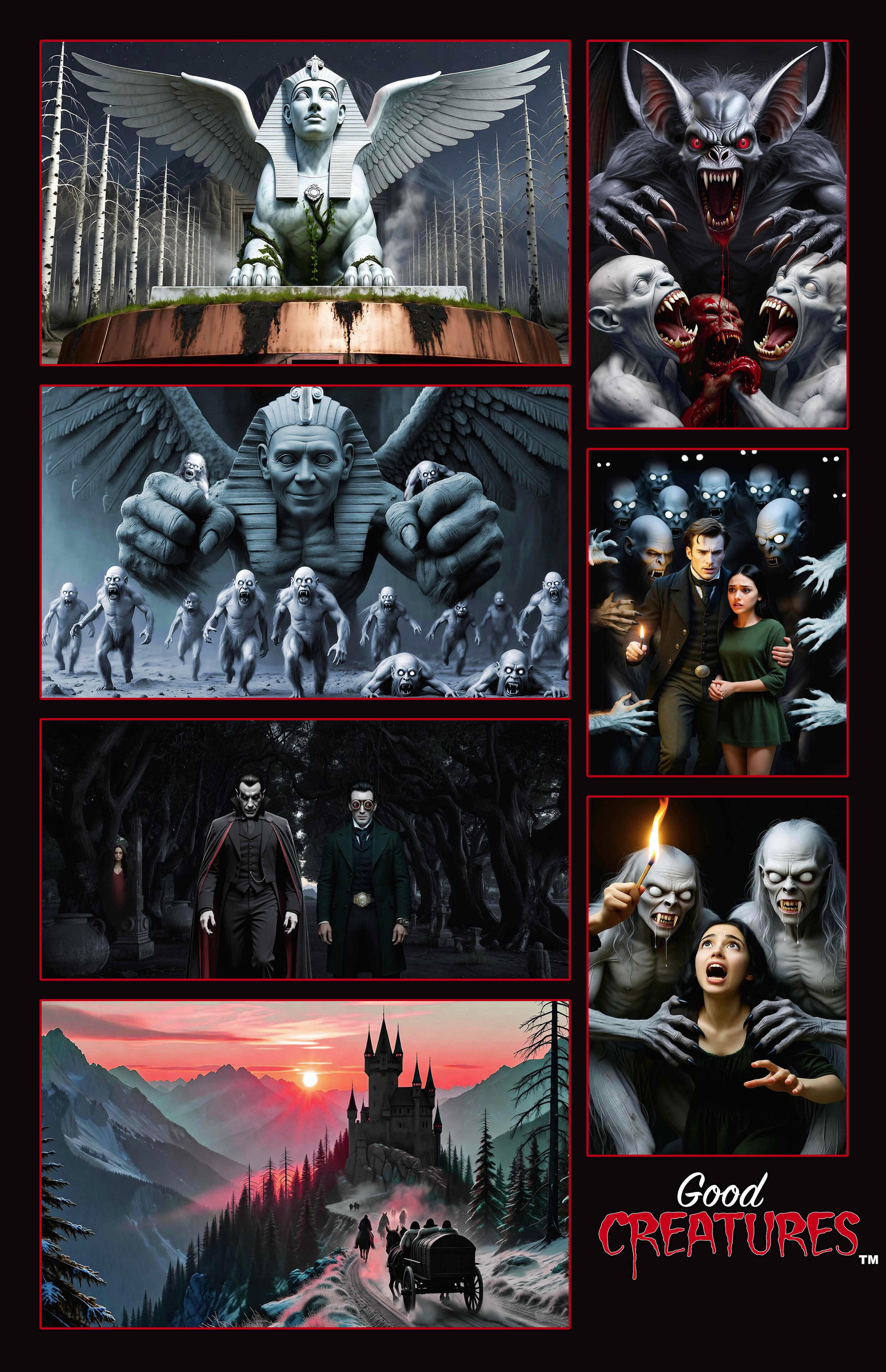
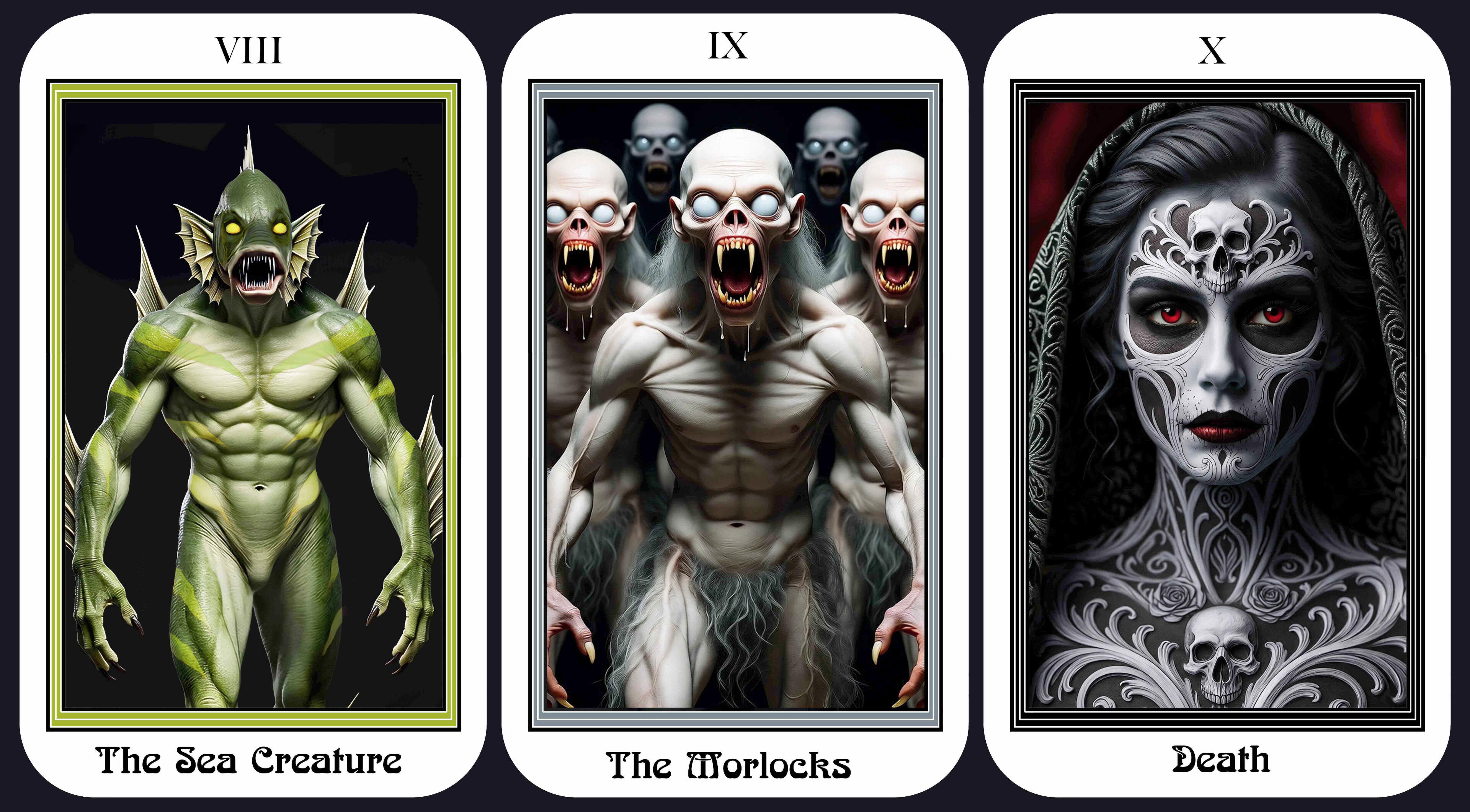
I even tapped Grok’s rendering abilities to create the book’s cover art, though that came with its own inherent challenges. AI generators often falter in rather humorous ways when tasked with rendering multiple characters in a scene. The more complex the prompts, the more issues you have. Thus, I rendered each figure individually, creating over 200 variations per character to capture my precise vision, and blended elements in Photoshop when needed. In some cases I even sourced alternative AIs when Grok failed to meet the challenge. The process was exhaustive, a meticulous quest to distill my affection for these characters into a tangible, cohesive form.
In the end, this novel emerges not as a solitary creation but as a symphony of influences: from Jan Joiner’s spark of literacy, to Jim Shooter’s strategic wisdom, Mark McElligott’s artistic alchemy, and the judicious use of AI as a modern muse. It is my hope that the exhaustive refinement invested herein conveys the story in its purest essence, inviting you to immerse yourself in a world where timeless horrors find new purpose. May it inspire in you the same wonder that these mentors kindled in me.
Welcome, monster fan! Please provide your email below to receive your exclusive FREE copy of Good Creatures: Book 01 - Rescue. Enjoy!